Planning a first safari can feel like standing in front of a wall of brochures. There are thousands of options, nightly rates that swing from a few hundred dollars to well over a thousand, and seasons that seem to make or break the whole experience. Most first-time travelers have no idea where to start, and that’s completely understandable.
The good news: choosing a safari lodge becomes manageable once you break the decision into a few clear steps. This guide walks you through why your lodge shapes the entire trip, how to pick the right park or reserve, how to match your travel dates to the season, and what you should realistically budget. We’ll also compare lodge styles, from permanent lodges to mobile camps, cover the booking and logistics details that trip people up, and finish with a simple checklist so you can book your first safari with confidence.
Why Your Choice of Safari Lodge Shapes the Whole Trip
On safari, your lodge is far more than a place to sleep. It sets your game drive schedule, determines the quality of your guide, and decides how close you’ll get to the animals. A lodge with experienced trackers and small vehicles can mean the difference between watching a leopard for twenty minutes and catching a distant shape in the grass before moving on.
Location matters just as much. A lodge inside or right next to a reserve lets you head out at first light, when animals are most active, and return for a proper breakfast between drives. Stay far outside the gates and you can easily lose an hour or more each way, turning your day into a commute rather than a wildlife experience.
Why structure helps first-timers
If it’s your first safari, look for lodges with a structured daily program: a morning drive, a long midday break, then an afternoon drive that often continues after dark. This rhythm is proven, and a good lodge builds it around wildlife movement. Self-drive setups offer freedom, but they put all the responsibility for finding animals on you, and that’s a steep learning curve when you don’t yet know what to look for.
Pick the Right Park or Reserve First
Your park choice should come before your lodge choice, because it narrows everything else. For first-timers, two names come up again and again: Kruger in South Africa and the Masai Mara in Kenya. Both offer easy access from major airports and high densities of big cats, which means you’re likely to see lions, leopards or cheetahs even on a short stay.
The Serengeti in Tanzania is another excellent option, working especially well from June to October when wildlife viewing is at its best. The Okavango Delta in Botswana peaks in the dry months too, and delivers spectacular, intimate game viewing, but expect to pay noticeably more than in the other destinations.
Consider a private reserve
If you’re leaning toward Kruger, look at the private reserves that border it. These share unfenced boundaries with the national park, so the wildlife is the same, but the rules differ in your favor. Private reserves allow off-road driving to follow a sighting and night drives, both of which national parks typically restrict. For a first trip, that flexibility adds up to more memorable encounters and a fuller day.
Match Your Travel Dates to the Season
Timing shapes what you’ll see, so match your dates to your priorities. The dry season from June to October is the classic choice across East and Southern Africa. Vegetation is sparse, animals gather at rivers and waterholes, and wildlife is easier to spot because there’s simply less cover. If seeing large numbers of animals is your main goal, this is the window to aim for.
Shoulder and wet seasons
The shoulder months of March through May and November come with a real trade-off: rates drop and crowds thin out, but rain can thicken the vegetation, making animals harder to find. If your budget is tight and you don’t mind a bit of green in your photos, these months offer excellent value.
The wet season, roughly December to March, is the best time for birding, and it’s when many animals give birth, so you may see newborn antelope and predators on the lookout. The flip side is that game viewing is genuinely harder, with animals dispersed and hidden in lush growth. First-timers focused on the Big Five are usually better served by the dry season, while birders and photographers after baby animals may prefer the green months.
Set a Realistic Budget for Your Safari Lodge
Safari lodge pricing can look confusing at first, because rates swing wildly depending on the country, the reserve and the season. The good news is that first-timer options generally fall into a fairly clear range, from around $150 to well over $1,000 per person per night, and knowing where you sit in that range makes the rest of your planning much easier.
Entry-level lodges typically run roughly $150-400 per person per night. At this level you can usually expect meals and two game drives a day to be included, along with a comfortable room and shared game drive vehicles. It is a genuinely good safari experience, just with fewer frills.
What mid-range and luxury really get you
Once you move into the $400-1,000+ per night bracket, you are generally paying for smaller camps, more spacious rooms, finer dining and often a private guide or vehicle. Fewer guests per vehicle means better positioning at a sighting, which genuinely improves your game viewing.
Before you compare rates, check exactly what each price includes. Park fees, drinks, laundry and road or air transfers are frequently charged separately, and together they can add another 20-30% to the advertised nightly rate. A lodge that looks expensive may actually be the better deal if it bundles everything in, so always ask for a full cost breakdown before booking.
Choose Between Lodge Styles: Tented Camps, Lodges and Mobile Camps
The word “safari lodge” covers everything from solid brick buildings with swimming pools to a canvas tent under which lions have been known to stroll at night. Each style has its appeal, but they offer very different levels of comfort and closeness to the bush, and the right choice depends on how adventurous you feel on your first trip.
Permanent lodges, usually built in brick and thatch, offer the most comfort and predictability. You get solid walls, reliable electricity, often a pool and a proper dining room, and a set daily routine of game drives. If you are nervous about your first safari, this is the gentlest way to start.
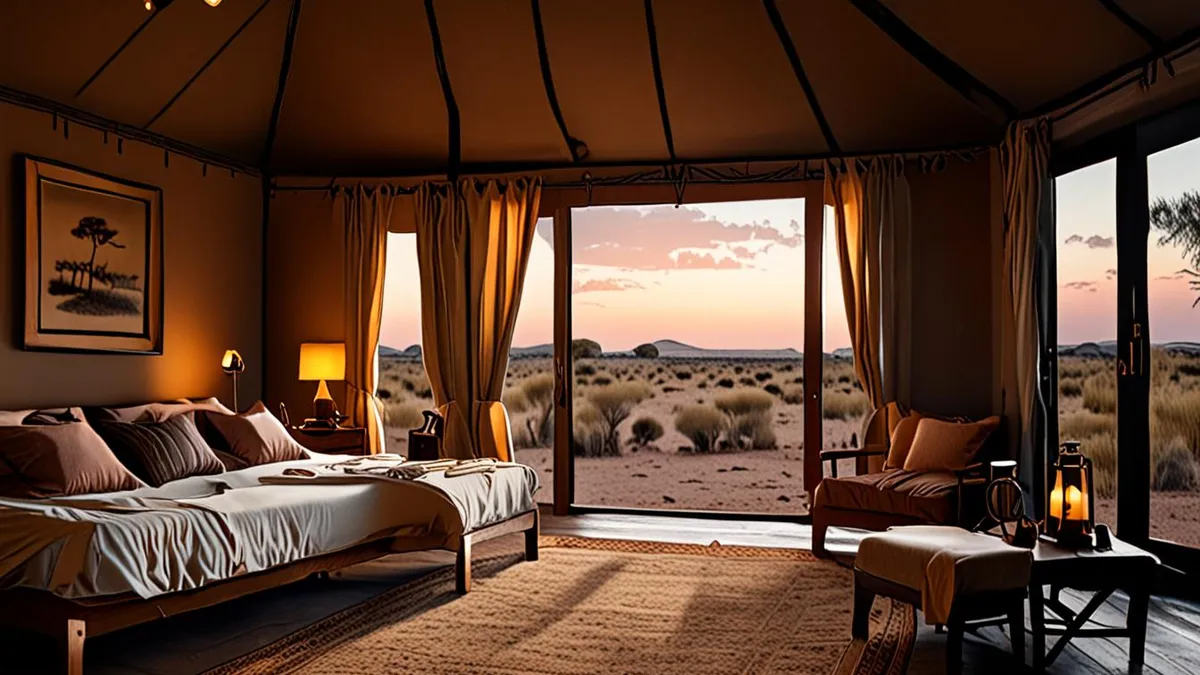
Luxury tented camps are a middle ground worth serious consideration. Picture sturdy canvas on permanent platforms, but with real beds, en-suite bathrooms and hot showers. You hear more of the bush at night, which many guests end up loving.
- Solar power is common in tented camps, so charging points may be limited to the main area or available only during certain hours of the day.
- Mobile camps move with the migration, striking and re-pitching across the season, which means the game is on your doorstep but facilities stay simpler.
- Canvas walls mean sound travels, so expect to hear hippos, hyenas or lions at night rather than your neighbor’s television.
For a first trip, a permanent lodge or a well-reviewed luxury tented camp hits the sweet spot. Mobile camps reward flexibility and a sense of adventure, so save them for trip number two.
How to Book Your Safari Lodge and Plan Logistics
A great lodge on paper can fall apart over logistics, so work through the booking details carefully before you pay a deposit. Safari camps are small, flights are on light aircraft, and small mistakes get expensive fast. Unlike a city hotel, where a mix-up costs you a phone call, a missed connection in the bush can mean losing a full day of game viewing or an entire night’s accommodation. Follow these steps in order.
- Book early for peak season. For June to October travel, aim to reserve your lodge 6-12 months ahead. Small camps often have only 8-12 rooms, so they sell out long before large hotels would.
- Confirm your light aircraft transfers. Many fly-in lodges are reached by small planes landing on dirt strips, and schedules can be tight. Ask exactly where you are picked up, when, and what happens if your incoming flight is delayed.
- Check the luggage limit. Most fly-in camps enforce a strict 15 kg limit per person in soft-sided bags, because small aircraft have limited cargo space. Hard-shell suitcases may simply be refused, so buy a duffel if you need one.
- Ask about malaria risk. Some reserves sit in malaria zones and others do not. Talk to a travel health professional about precautions, and confirm what your lodge provides, such as nets or repellent.
- Clarify child policies and single supplements. Some camps refuse younger children or charge a substantial premium for solo travelers. Get these answers in writing before you commit.
Before you pay, read the deposit and cancellation terms closely. Remote lodges often require a larger deposit upfront than standard hotels, and cancellation windows can be stricter because empty rooms are hard to refill at short notice. A travel insurance policy that covers trip interruption is worth arranging at the same time, not after.
It also pays to communicate directly with the camp once you have booked. Tell them about dietary requirements, medical conditions, mobility concerns and any special occasions well in advance, since kitchens and supplies are often stocked days ahead of your arrival. Ask how the lodge handles laundry, charging cameras and Wi-Fi, so your expectations match reality.
Once these details are locked in, the rest usually falls into place. Send your lodge a final confirmation a few weeks before arrival with your flight numbers and dietary needs, recheck your transfer times, and you can relax and look forward to the bush.
Final Checklist for Booking Your First Safari Lodge
Choosing your first safari lodge feels overwhelming because there are hundreds of options, wildly different price tags and several seasons to weigh. The way through it is simple: pick your park first, then match your travel dates to the June to October dry season or the quieter shoulder months of March-May and November.
From there, balance your budget of roughly $150 to $1,000+ per person per night against the lodge style that suits you, and book six to twelve months ahead for peak season travel. Get those three decisions right and the rest of the planning falls into place. If this helped you sort out your first safari, leave a comment or share the article with a fellow traveler.