Glamping has grown far beyond a single canvas-on-grass formula, and many travelers now find themselves torn between three very different options. A yurt, a safari tent and a geodesic dome all promise a night under canvas with real beds and proper shelter, but they differ sharply in comfort, weather protection and value for money. Choosing the wrong glamping styles for your dates or your group can mean a chilly night, a cramped layout or an inflated bill.
This guide compares the three side by side. We start by defining what actually sets each structure apart, then compare interior layouts, seasonal performance and typical price ranges. From there, you will find practical booking advice, a breakdown of which style suits couples, families and budget travelers, and a short summary to help you decide. By the end, you should know exactly which structure fits your trip, your budget and the season you plan to travel in.
What Defines Each Glamping Style
The three most popular glamping styles look similar from a distance — canvas, curved lines, a bed visible through the door — but they are built on completely different principles. Understanding those differences makes it much easier to predict how each one will feel to sleep in.
Yurts
A yurt is a circular tent built around a wooden lattice frame, tensioned with fabric or canvas and topped with a central crown. The design comes from the portable dwellings of Central Asian nomads, who used them for centuries on the steppe, which explains why modern yurts are surprisingly stable and weather-resistant. Most classic Mongolian-style yurts sleep 2–5 guests on a single circular floor plan, making them a solid choice for couples or small families.
Safari tents and geodesic domes
Safari tents borrow their design from African expedition camps: a large canvas tent stretched over a fixed frame, usually standing on a raised wooden deck. They are the giants of the glamping world, often offering around 40–60 m² of floor space including the deck, which is why they feel closest to a small apartment.
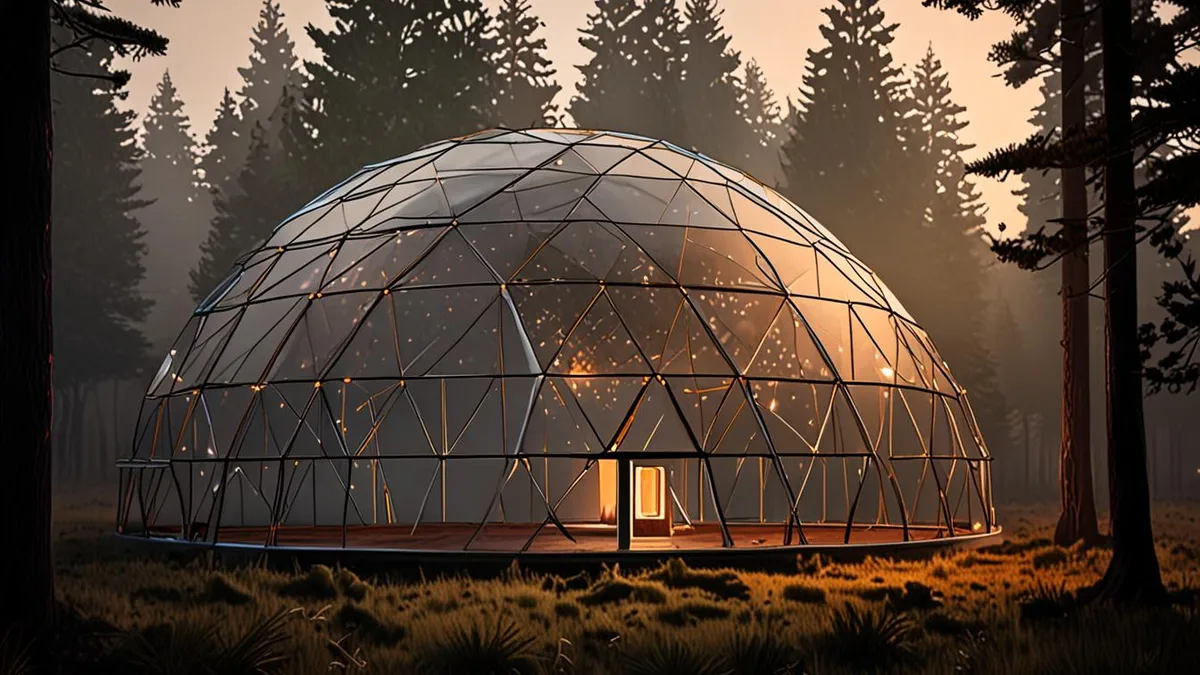
Geodesic domes take the opposite approach. These are spherical structures made from triangular panels, often with panoramic or transparent sections built into the shell. A typical dome measures about 5–7 m across and sleeps 2–4 guests, trading floor space for views and a distinctive sense of enclosure.
Comfort and Interior Layout Compared
Step inside each structure and the differences become obvious quickly. The three styles distribute space in very different ways, and that shapes everything from where you store your luggage to whether you can change clothes without an audience.
Yurts offer an open circular plan with a central skylight or crown letting in daylight. You usually get a proper bed and simple furniture, but there are no interior walls, so privacy zones are limited — everyone shares one room, and luggage tends to live in bags or low chests along the curved edge.
Safari tents feel most like hotel suites. The large floor area allows separate sleeping and living areas, and en-suite bathrooms plus covered decks are common at established sites. You can spread out, hang clothes and sit outside under shelter even when it rains.
Domes maximize the sense of space and views thanks to their curved walls and often transparent panels, but those same curved surfaces limit storage and wall-mounted furniture. Expect clever built-in niches rather than wardrobes.
- Window placement: domes often place transparent panels above the bed, so you can watch the sky from under the covers — something neither yurts nor safari tents can offer.
- Headroom: yurts give their tallest point in the center, while safari tents offer near-uniform ceiling height across the whole footprint, making them easier for tall travelers to move around in.
- Furniture flexibility: safari tents can accommodate sofas, dining tables and desks because of their straight walls, whereas dome interiors are usually limited to a bed, a small table and freestanding pieces that follow the curve.
Weather and Season: When Each Style Works Best
Weather tolerance is where the three styles really separate, and it should influence your choice as much as price or looks. A structure that feels magical in June can be miserable — or simply unavailable — in the off-season.
Safari tents: a fair-weather favorite
Safari tents are best in warm, dry months. Because their large canvas panels and fixed frames are designed for ventilation rather than insulation, most European and North American sites close between November and April. If you are planning a spring or autumn trip, always confirm the exact opening dates with the site, since they vary by region and operator.
Yurts and domes in the cold
Yurts and domes handle wind and cold noticeably better. Their rounded shapes shed gusts, and many operate year-round thanks to insulated covers and wood stoves. That makes them strong candidates for winter breaks — imagine a wood stove crackling while snow settles outside, or a coastal off-season escape like the ones described in celebrating New Year along Belgium’s coast. Always ask whether heating is included and how the stove is fueled before booking a cold-weather stay.
Domes with transparent panels deserve one extra caveat. They are ideal for stargazing seasons, when dark nights and clear skies make the panoramic sections the main attraction, but they can overheat in direct summer sun without shade or ventilation. If you are booking a transparent dome for a midsummer stay, ask about blinds, shading or air circulation — a dome without these can turn into a greenhouse by mid-morning.
Price Ranges and Value for Money
Glamping rates vary more by style than most travelers expect. As a rough guide, expect to pay around $90–$200 per night for a yurt, $120–$300 for a safari tent and $150–$400 for a dome. These ranges shift with location, season and how luxurious the setup is, but they give you a solid baseline when comparing listings.
Value depends on what you actually get for your money. Safari tents usually win on raw space: with roughly 40–60 m² of floor area including a deck, they deliver the most square meters per dollar of the three styles. Domes sit at the top of the price range because you are paying for the panoramic windows, the novelty factor and often the best views on the property, not for extra room.
Timing matters too. Many glamping sites discount midweek and shoulder-season stays by around 20–30%, which can bring a dome that normally feels overpriced into a comfortable budget. If your dates are flexible, booking Tuesday through Thursday in late spring or early fall is often the cheapest way to try a premium style.
- Some sites charge a cleaning or service fee on top of the nightly rate, so check the final total before comparing two listings side by side.
- Domes and yurts that operate in the off-season sometimes price lower in winter, making a wood-stove-heated stay surprisingly affordable.
- Safari tents with en-suite bathrooms sit at the higher end of their range, while simpler models with shared facilities cost noticeably less.
- Larger domes, up to about 7 m across, can sleep small groups, which spreads the nightly rate across more people and lowers the cost per person.
How to Book the Right Glamping Stay
Glamping sites are small by nature, often with just a handful of units spread across a field, a hillside or a lakeside clearing. That intimacy is part of the charm, but it also means the best sites fill up quickly, especially for summer weekends and holiday periods. A little planning goes a long way, and asking the right questions before you book can save you from disappointment when you arrive.
- Book early for peak dates. Reserve 2–4 months ahead for summer weekends at most sites, and 6 or more months for high-season dome stays with panoramic views. Some sites may only have one or two domes with the best outlook, so those units are the first to go. If your dates are flexible, midweek stays are usually much easier to secure.
- Check the bathroom situation. Some units have en-suite bathrooms, while others rely on shared facilities a short walk away. This makes a real difference in comfort, particularly with kids or in cooler weather when a nighttime trip across the site is less appealing.
- Confirm heating for off-peak stays. If you are traveling outside peak summer, ask whether heating such as a wood stove is included, whether firewood is provided and whether someone shows you how to use it. A cozy stove can make an autumn or winter stay wonderful, but only if you know how to keep it going.
- Read the minimum-stay rules. Small sites often require 2–3 night minimums on weekends, which affects whether a quick overnight stop is even possible. If you only have one night free, look for sites that accept single-night bookings midweek.
- Understand cancellation terms. Because units are few, many small operators enforce stricter cancellation policies than hotels. A single canceled booking can leave an empty tent they cannot easily resell, so know the deadline for a refund before you commit.
Once you have verified these details, send a short message to the host with any specific needs, such as a crib for a toddler, a ground-floor unit for someone with limited mobility or a late arrival after work. Small glamping sites tend to respond personally and can often accommodate requests that larger properties cannot. A quick conversation before booking also gives you a feel for the host, which is often the best indicator of how well your stay will go.
Which Glamping Style Suits Which Traveler
There is no single best glamping style, only the one that fits your trip. The right choice comes down to who is traveling, what you need from the space and how flexible your dates are. Here is how the three styles typically match up with different kinds of travelers.
Couples chasing romance usually get the most from a dome. The curved walls and transparent or panoramic panels put the landscape and night sky front and center, and in a dark-sky location the stargazing from bed can be the highlight of the whole trip. Space is modest, but for two people that rarely matters.
Families tend to be happiest in a safari tent. The larger floor plan, separate sleeping areas and covered deck give everyone room to spread out, and an en-suite bathroom removes the awkward nighttime walk across a dark site with children.
Travelers watching their budget, or anyone planning an off-season escape, should look at the yurt. It is typically the cheapest of the three styles, and because many yurts stay open through the colder months, they open up winter and shoulder-season trips that seasonal safari tent sites simply cannot offer. If you can travel outside peak weekends, the savings compound quickly.
- For couples, look for domes positioned away from other units, since privacy around transparent panels varies a lot between sites.
- For families, check the actual bed configuration, because some safari tents sleep four only if two people share a sofa bed.
- For budget travelers, yurts with a shared kitchen building stretch savings further by letting you self-cater instead of dining out.
- For mixed groups, some sites place yurts and domes side by side, letting a couple book a dome while friends take a yurt on the same property.
Choosing Between Yurt, Safari Tent and Dome
None of the three styles is objectively better — they differ mainly in layout, season, price and views rather than quality. A yurt gives you warmth and value in the colder months, a safari tent gives you the most space and hotel-like comfort in warm weather, and a dome gives you the best scenery and stargazing. Match the style to your travel dates, your budget and whether you care more about space or views, and the choice largely makes itself.
Once you know which style fits your trip, remember that the best units book out fast: reserve early for peak weekends, especially for high-season dome stays. If you’ve stayed in a yurt, safari tent or dome — or you’re still deciding between them — leave a comment below or share this article with a friend who’s planning a glamping trip.