You love the idea of sleeping under the stars, but the reality of a cold tent, a thin sleeping bag and a trek to shared campsite bathrooms at midnight? Not so much. That’s exactly where glamping comes in, and if you’ve ever wondered what is glamping, this guide will walk you through everything you need to know before booking your first luxury camping stay.
Over the next few sections, we’ll explain what glamping actually means, break down the main types of accommodation from safari tents to treehouses, and give you a realistic picture of what you’ll pay per night. You’ll also find advice on when to go and how far ahead to book, a checklist for choosing a quality site, and a practical packing list for your first trip. By the end, you’ll know how to enjoy nature without giving up a real bed, warm bedding and a proper cup of coffee in the morning.
What Is Glamping, Exactly?
Glamping is short for glamorous camping, and it describes nature-based stays where the comfort is already built in. Instead of pitching a tent yourself, you arrive to a ready-made structure with a real bed, proper linens and weatherproof walls or canvas designed to keep the elements out. Think of it as a hotel room placed in a field, forest or mountainside.
The biggest difference from traditional camping is what you don’t do. There’s no gear to buy, pack or assemble, no struggling with tent poles in the wind, and no air mattress that slowly deflates overnight. The accommodation is set up and waiting for you on arrival, usually with lighting and heating or cooling already included.
How comfortable is it, really?
Comfort levels vary widely, and that’s part of what makes glamping flexible. At the top end, safari tents can come with en-suite bathrooms, full kitchens and decks with outdoor furniture. At the simpler end, a yurt might offer a cozy bed and wood stove but rely on shared bathroom facilities a short walk away. Neither is better — it just depends on how close to nature you want to feel and how much hotel-style convenience you expect. This guide will help you match the type of stay, the season and the site to your own comfort needs.
The Main Types of Glamping Accommodation
Not all glamping stays look the same, and the type of structure you choose shapes the whole experience. Canvas options put you closest to the sounds and smells of the outdoors, while solid-walled stays behave more like a small cabin in the woods. Most sites include a real bed, linens, lighting and heating or cooling regardless of the structure, so the main difference comes down to how much nature you want to hear through the walls. Here are the main categories you’ll come across.
- Safari tents and bell tents: these canvas structures, often raised on wooden decks, are the classic glamping image. Many come furnished with proper beds, rugs and lounge areas, and the canvas walls mean you’ll hear rain and birdsong more clearly than in a solid building. They suit dry, mild trips best, since canvas offers less insulation on cold or windy nights.
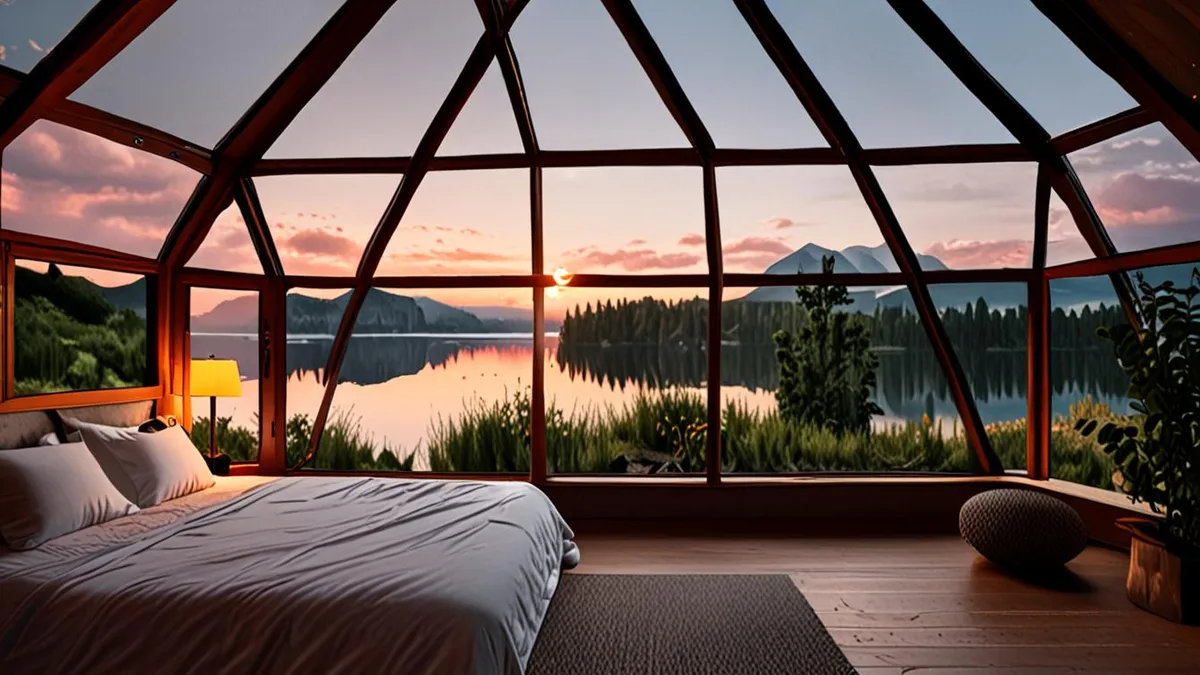
- Geodesic domes and yurts: round structures that often feature panoramic windows framing the view, which makes them popular in cooler months when you want to watch the weather from a warm bed. Domes typically have clear roof panels for stargazing, while yurts traditionally center around a circular living space.
- Treehouses, cabins and renovated Airstreams: solid-walled options for travelers who want maximum insulation and a more conventional room feel. These handle wind, rain and cold best, and an Airstream adds a retro touch with a compact but fully fitted interior.
So how do you choose? Match the type to your comfort needs and the season of your trip. Canvas feels closer to nature and suits dry, mild stays, while solid walls make sense for early or late-season trips when nights turn chilly. If you tend to get cold at night, lean toward a dome with heating or a cabin rather than a simple bell tent. Also check whether your chosen type comes with a private bathroom or en-suite facilities, since some canvas stays rely on shared facilities a short walk away.
How Much Does Glamping Cost?
Glamping covers a wide price range, so it helps to know where your expectations sit before you book. As a general rule, expect roughly $100-$500 per night depending on the stay type, location and season. That’s usually per accommodation rather than per person, which matters for couples or families splitting the cost.
What drives the price up or down
Safari tents and bell tents sit at the lower end of the range, especially on smaller sites away from famous destinations. Treehouses and domes with en-suite bathrooms command the top of the range, since they combine a distinctive structure with hotel-style facilities. Location plays a big role too: the same tent near a national park or coastline can cost noticeably more than one in the countryside an hour away.
Timing is your best lever for savings. Shoulder-season dates in May and September-October can cut rates noticeably versus peak summer, and you’ll often get quieter surroundings as a bonus. If your dates are fixed, midweek stays are typically cheaper than weekends.
Finally, compare like with like. Before judging prices, check whether meals, activities and cleaning fees are included. One site at $150 with breakfast and firewood included can beat a $120 site where everything is an add-on, so read the inclusions list carefully before you book.
When to Go: Seasons and Booking Windows
Glamping follows the same rhythm as any outdoor trip: the season you pick shapes the whole experience. In most of Europe and North America, peak season runs from June to August, when the weather is warmest and most reliable. That is when canvas tents feel their best and sites are at their fullest, so expect the highest rates and the fastest bookings.
Timing matters just as much as the destination. Summer weekends, especially holiday weekends, get reserved far in advance, so book 3-6 months ahead if you have your heart set on a specific site or tent. Midweek stays are a different story — 1-2 months ahead is usually enough, and you will often find better availability from Monday to Thursday anyway.
Why shoulder season works in your favor
If you have flexible dates, aim for May or the September-October window. These shoulder months typically bring noticeably lower prices, thinner crowds and a calmer atmosphere around the site. The trade-off is cooler nights, especially in canvas accommodations, so pack layers you can add and remove easily. A warm hoodie and an extra blanket make an evening by the fire far more pleasant.
Winter glamping is absolutely possible, but choose your structure carefully. Geodesic domes and solid cabins with proper heating handle cold weather well, and waking up to a frosty landscape through a panoramic window can be spectacular. Canvas tents, on the other hand, are best left to the warmer months unless a site specifically advertises winter-ready insulation. When in doubt, message the operator and ask directly how the unit performs in cold weather.
How to Choose a Quality Glamping Site
Not all glamping sites deliver the experience their photos promise, so a little homework pays off. Start with guest reviews, and focus on the recent ones. Older reviews may describe different management, refurbished tents or facilities that no longer exist. Look for mentions of cleanliness, how well the heating works, and whether guests felt the site matched its listing photos. If several reviewers mention a musty smell in the canvas or a heater that struggles on cold nights, take that seriously.
Next, confirm exactly what is included before you book. “Glamping” covers a huge range, from safari tents with en-suite bathrooms to simple yurts with a shared washroom down the path. Check the real bed size — a “double” can mean a proper queen or a narrow futon — and whether you get kitchen access, Wi-Fi or a private deck.
- Bathroom setup: ask whether the en-suite bathroom is inside your unit or in a separate building a short walk away, since that changes a rainy-night experience considerably.
- Location and access: some sites are remote by design, so check the distance to the nearest town for groceries, restaurants and fuel, and whether the final stretch of road is paved or gravel.
- Cancellation policy: small glamping operators often have stricter terms than hotels, sometimes with shorter free-cancellation windows, so read them carefully before committing.
- Site layout: if privacy matters to you, ask how close the units are to each other and whether there is vegetation or screening between them.
Finally, don’t hesitate to email the operator with questions before booking. A quick, helpful reply is usually a good sign of how the whole stay will go.
What to Pack for Your First Glamping Trip
One of the best things about glamping is how little you actually need to bring. The bedding, towels and cooking equipment are provided, so leave the tent, sleeping bags and camp stove at home. That said, a few thoughtful items will make your first trip noticeably more comfortable, because even luxury camping still happens outdoors.
The biggest surprise for first-timers is how quickly temperatures drop once the sun goes down, even on a warm summer day. Dress in clothing you can easily layer up or strip off as conditions change, and add a warm jacket for evenings around the fire. Sturdy footwear matters too — paths between tents, washrooms and parking areas are often grass, gravel or uneven ground rather than paved walkways, so flip-flops alone won’t cut it.
- Flashlight or headlamp: many sites keep lighting deliberately low to preserve the atmosphere, and the walk from the parking area to your tent can be genuinely dark.
- Food and drinks: if meals aren’t included, bring everything you need, since the nearest shop may be a drive away — check whether your unit has a cooler, fridge or full kitchen before you plan meals.
- Cash or card: for on-site extras like firewood bundles, breakfast add-ons or a local produce stand, since not every small operator takes cards on site.
- Quick-dry towel: towels are provided, but a spare one is handy for swimming, muddy boots or unexpected rain.
Finally, pack a small bag with sunscreen, insect repellent and a reusable water bottle. If you’re visiting a canvas tent or yurt, a pair of slip-on shoes for nighttime bathroom trips is another small luxury you’ll be glad you thought of. With those basics covered, you can spend your energy enjoying the setting instead of improvising once you arrive.
Wrapping Up Your First Glamping Trip
Glamping solves the exact problem that keeps many of us from camping: you get to sleep under the stars without a cold tent, a thin sleeping bag or a trek to shared campsite bathrooms. Instead, you arrive to a real bed, linens and a weatherproof structure that’s already set up for you, typically for somewhere around $100-$500 per night.
The formula for a great first trip is simple. Pick your stay type and travel season, then book 3-6 months ahead if you’re set on a peak summer weekend. Choose a site based on recent reviews and what’s actually included, and pack little more than layered clothing for the evenings. That’s really all it takes to enjoy the outdoors in comfort. If this guide helped you plan your first luxury camping trip, leave a comment or share it with a friend.